The two-minute brushing routine that actually works
Most kids brush for about 45 seconds. Here is a simple four-zone routine, the right toothpaste amounts by age, and tricks to end the bedtime battle.
Ask a room full of kids how long they brush and you will hear answers like "a long time" and "a hundred hours." In reality, studies that time children find most brush for less than a minute, and the back molars, where most cavities start, get the least attention. The fix is not a fancier toothbrush. It is a simple routine and a timer.
Our brushing timer on this site splits two minutes into four 30-second zones. Here is why that works, and how to make it stick at home.
The four-zone method
Divide the mouth into four zones: top left, top right, bottom left and bottom right. Spend 30 seconds in each zone. Within each zone, brush the outside, the inside near the tongue or roof of the mouth, and the chewing surfaces of the back teeth.
Use small circles with the bristles angled toward the gumline. Scrubbing hard does not clean better and can irritate gums. A soft-bristled brush with a small head reaches back molars much more easily than an adult brush.
- 0:00 to 0:30, top left
- 0:30 to 1:00, top right
- 1:00 to 1:30, bottom left
- 1:30 to 2:00, bottom right
How much toothpaste
Fluoride toothpaste is one of the best cavity fighters there is, and the amount matters more than the brand.
- First tooth to age 3: a smear the size of a grain of rice
- Age 3 to 6: a pea-sized amount
- Age 6 and up: a pea-sized amount, spit without rinsing
Why spitting without rinsing helps
When kids rinse with a big gulp of water, they wash away the fluoride that was just starting to work. Once your child can reliably spit, usually around age 6, teach them to spit out the extra foam and leave the rest. It feels strange for a week, then it is just normal.
Parents still do a pass until about age 8
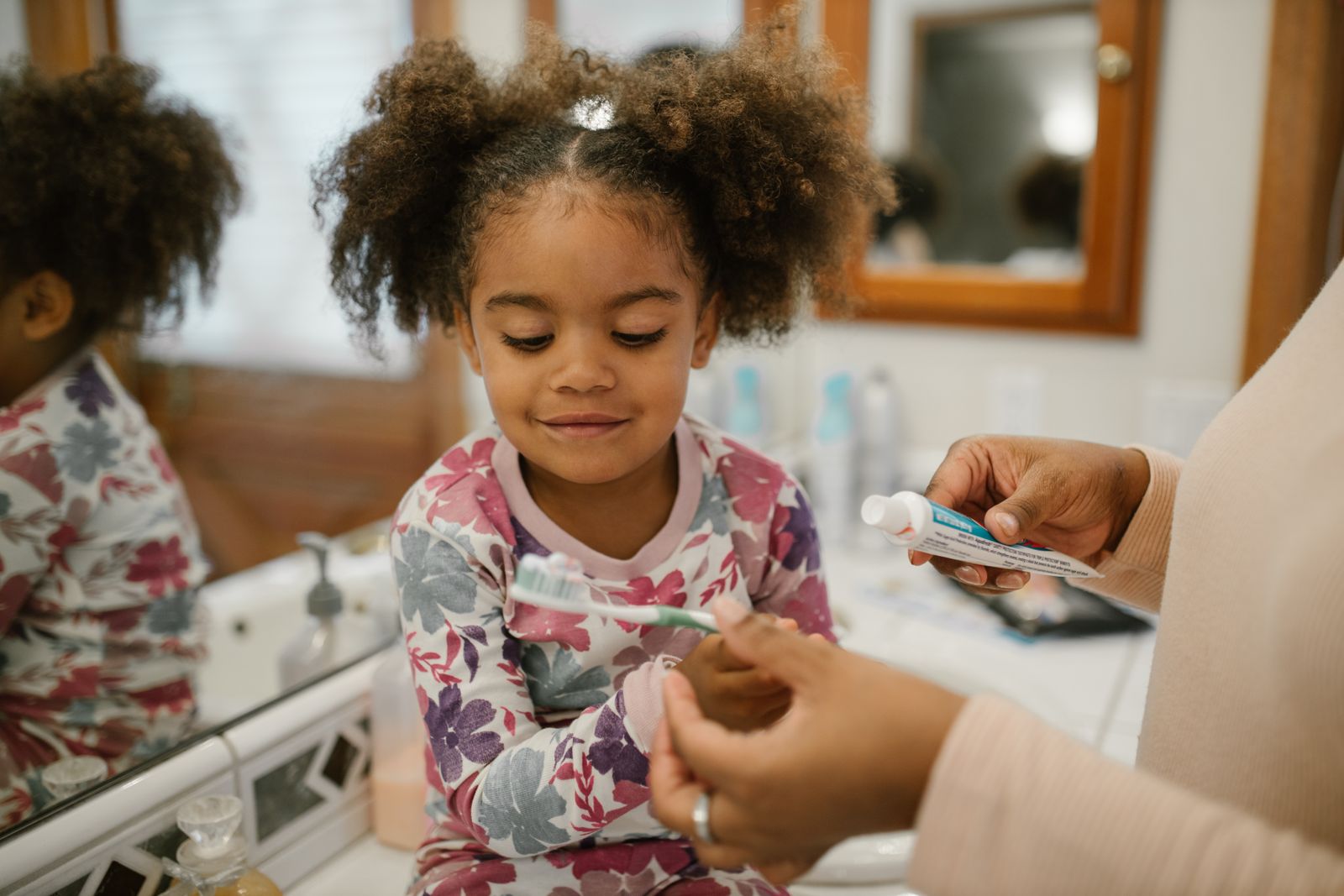
Young kids do not have the hand control to clean every surface. A good rule of thumb is that if your child cannot tie their shoes yet, they still need help brushing. Let them go first so they build independence, then take a turn yourself. Sitting behind your child with their head tilted back against you gives you the best view.
For toddlers who fight brushing, try lying them across your lap, singing the same song every night, or letting them brush your teeth first. Consistency beats perfection. Two imperfect brushes a day are better than one heroic one.
Make it a game
Kids respond to routines they feel part of. A few ideas our families love:
- Use our online timer and let your child press start
- Pick a two-minute song and only play it during brushing
- Keep a sticker chart on the bathroom mirror
- Let kids choose between two toothbrushes each night
- Brush together as a family so it feels normal
Do not forget flossing
Once two teeth touch, brushing cannot clean between them. That is often around age 2 to 3 for back baby molars. Floss picks with a handle are easier for small mouths. Aim for once a day, ideally at bedtime.
When to replace the toothbrush
Swap toothbrushes every three months, or sooner if the bristles splay out. Kids who chew their brushes may need a new one monthly. Always replace a toothbrush after strep throat, flu or a stomach bug.
If brushing is still a daily battle, bring it up at your next checkup. Sometimes a sensitive spot, a loose tooth or a sensory issue is behind the resistance, and we can help you find a workaround.
This article is general education for parents, not medical or dental advice. Every child is different, and results vary. Ask your own dentist or pediatrician about your child's situation.